Every autumn the same question turns up, usually from a child holding an empty bag: are the conkers ready yet? The honest answer is that conkers are ready when the tree has finished with them, and that moment shifts by a fortnight or more depending on where you live, how high the ground is, and what kind of summer the tree has had. What follows is the season as it actually unfolds, from tight green husks in August to the last windfall after the first hard frost.
The Short Answer
In most of Britain and Ireland, the dependable picking window runs from the middle of September to the middle of October. If you want one week to circle in the diary, make it the last week of September and the first week of October: husks are splitting, conkers are dark and heavy, and there are still plenty on the ground.
Local conditions move that window around. A big, south-facing tree in southern England can be dropping usable conkers in the first days of September. In northern Scotland, upland Wales or the Pennines, the same week may offer little but green husks, and early October is the better bet. A cold, late spring pushes everything back; a long, warm summer can bring the first real falls forward. Altitude matters too: a tree at 300 metres will always be a week or two behind one in a sheltered valley. And a tree with its feet in damp soil may hold its conkers longer than one on free-draining chalk.
How to Tell a Conker Is Ready
A ripe conker announces itself. Look at the husk first, then weigh the seed in your hand. These signs together mean you have a keeper:
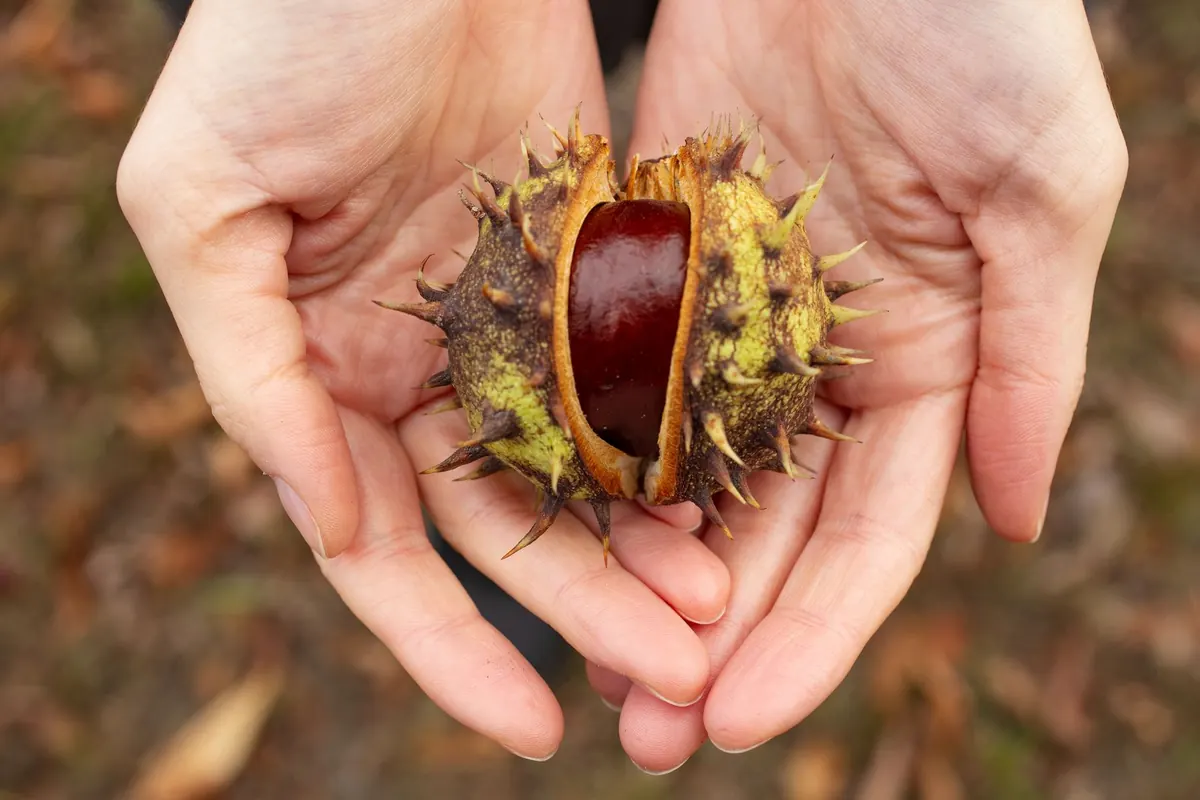
- The husk has gone from bright green to a dull yellow-brown, often blotched with darker patches.
- It has split into its three valves, or opens with a gentle press under your boot heel.
- The conker sits loose in the husk rather than being gripped tight.
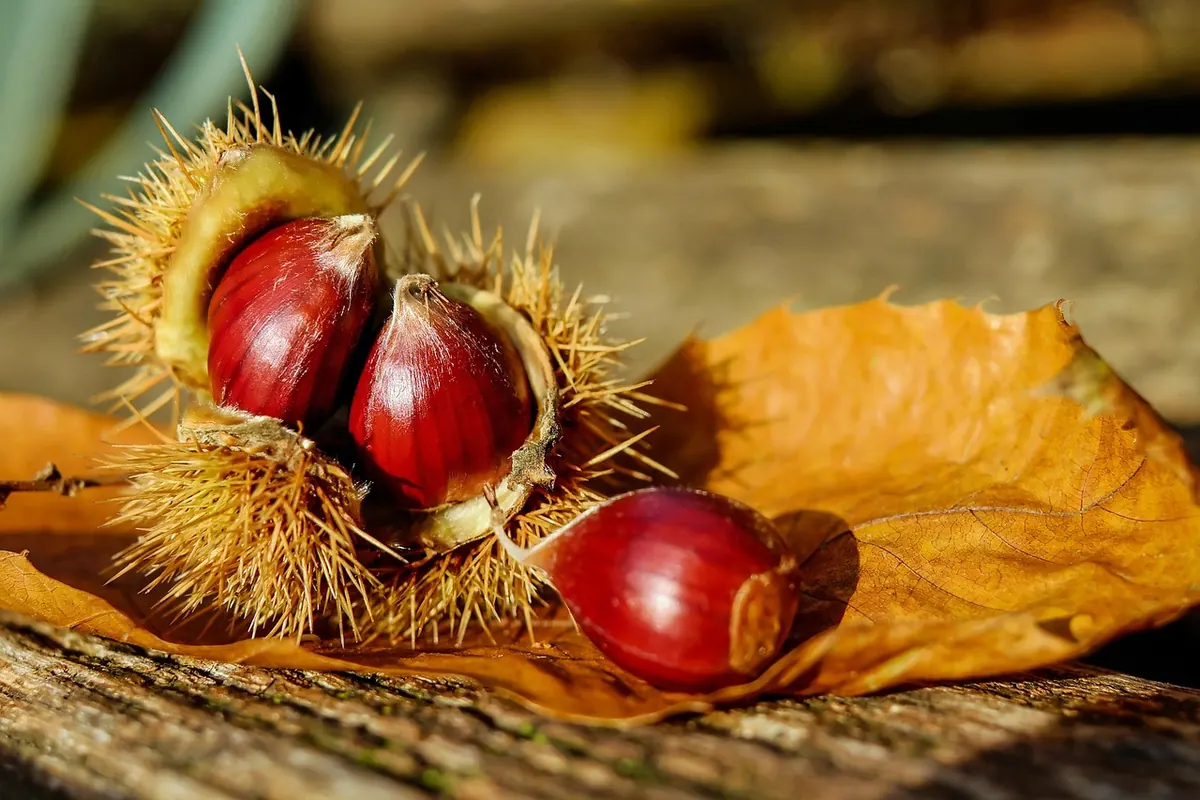
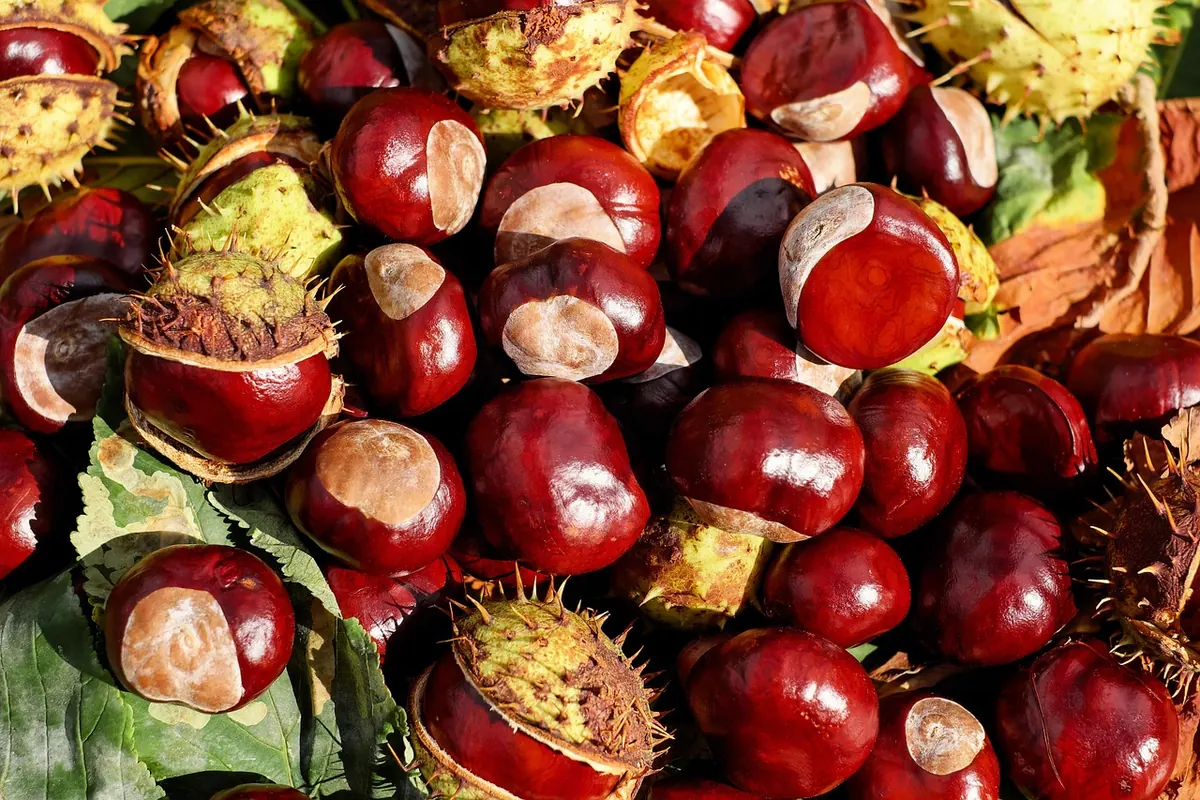
- There is a pale, round patch — the scar where it was attached inside the husk.
- The shell is glossy and deep mahogany, and feels hard, almost like plastic under a thumbnail.
- It is heavy for its size and sinks straight to the bottom of a bowl of water.
Unready conkers are the reverse: green husk, pale white or cream seed, soft shell, light as a cork. Dropped in water, they float. Leave them and come back in a week or two.
The water test is worth doing at home if you are unsure. Fill a bowl with cold water and drop your conkers in. The heavy, viable ones sink; the light, hollow or grub-damaged ones float. Remove the floaters. A good conker should feel dense and cold, like a small stone. If it rattles when you shake it, the kernel has dried out or been eaten away — discard it.
August: Green Husks and False Starts
Through August the conkers inside the husks are still being filled. They are white or cream, soft enough to dent with a fingernail, and the husk holds them in a tight three-part grip. Nothing you find on the ground this month is worth collecting.
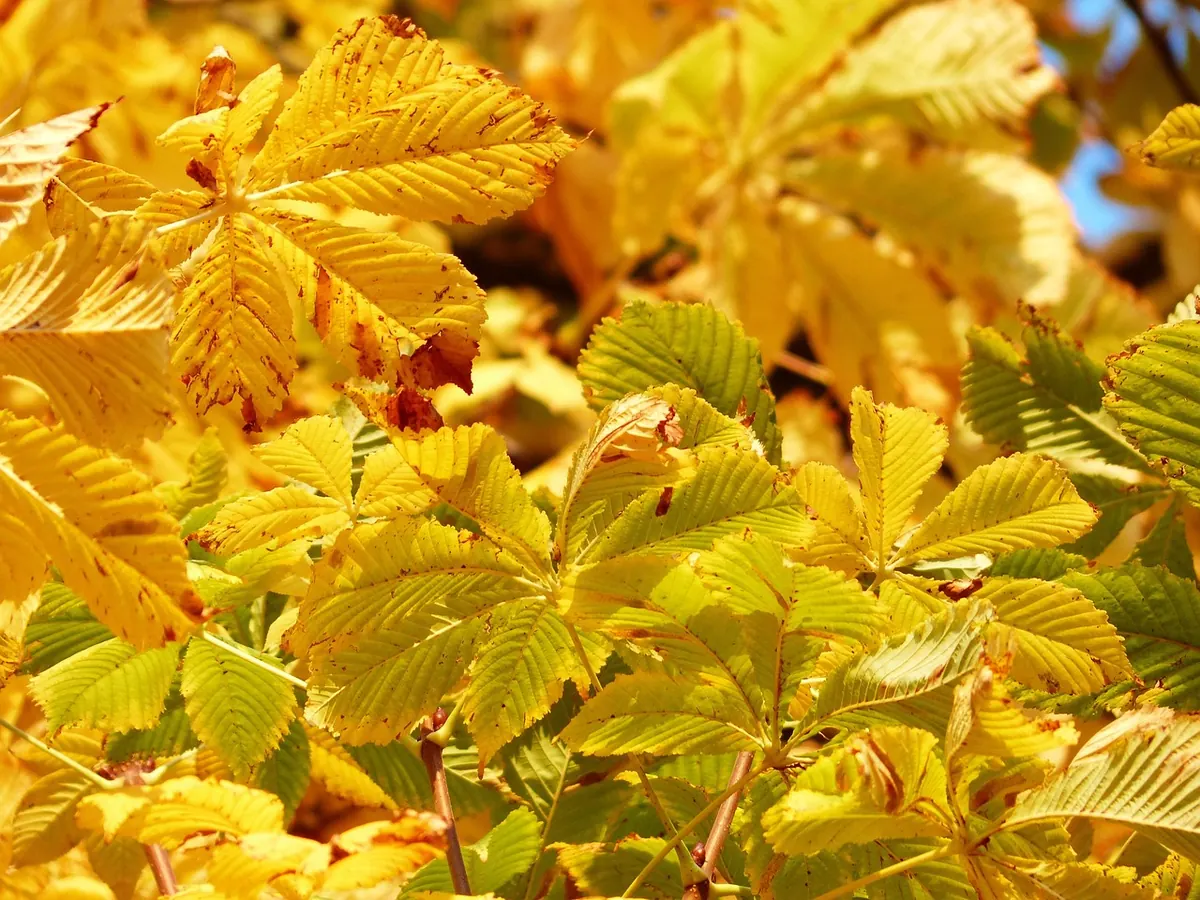
August storms do knock branches down, and the conkers on them look tempting, but they shrivel within a day or two and never harden properly. The other August confusion is the tree itself. Horse chestnuts attacked by leaf miner go brown and skeletal in high summer, weeks before they should, which makes a tree look finished when its conkers are still growing. Leaf damage does not mean the seed is ripe; check the husk, not the canopy. The leaf miner is a tiny moth whose larvae burrow through the leaves, leaving brown blotches. It weakens the tree but does not necessarily ruin the conkers — though heavily infested trees may drop their crop early, and those conkers are often smaller than usual.
August is a good month for one thing: scouting. Note which trees carry a heavy crop, which sit on a slope where conkers roll into a tidy pile, and which have a path beneath them so you can walk the ground easily in October. Look for the tell-tale spiny husks forming on the branches. A tree with a dense canopy of green leaves and clusters of green husks is one to remember. If you can, visit at different times of day to see where the wind blows the fallen conkers.
September: The Season Opens
The first husks fall in late August and early September, usually on a windy day, and usually the worst ones. Early windfalls are often small or damaged: a conker with a neat round hole in the shell, or a white grub curled inside, will not keep and will not play. Sweep them aside.
From the middle of the month, quality improves fast. A simple test when you are unsure: open one husk from a tree that has started dropping. If the conker inside is dark brown all over, with a hard shell and a clear pale patch, the tree is ready. Start collecting in earnest.
The best picking times are after a windy night. Go out early, before the squirrels and other children have cleared the ground. Look not just directly under the tree but also along the edges of paths and in gutters, where conkers roll and collect. A sloping bank can funnel them into a drift. Take a bag and a stick — the stick is useful for turning over husks without getting your hands sticky with the sap, which can leave a bitter taste and a brown stain.
In September the husks are still pale brown and the conkers are at their glossiest. This is the peak of quality: hard, shiny, heavy. But the crop does not all fall at once. A horse chestnut sheds its conkers over three or four weeks, so visit your chosen tree every few days. The very best conkers are often those that fall in the first decent gale after the middle of the month.
October: Peak Season and the Best Picking
October is the heart of the conker season. By now most trees are dropping freely, and the ground beneath a good horse chestnut can be carpeted with husks and seeds. The air smells of damp leaves and the husks have turned a deep, brittle brown. This is when you find the classic conker: large, dark, perfectly round, with a polished shine that lasts until it dries.
The first frosts may arrive in October, especially in the north. A light frost does not harm fallen conkers, but a hard, prolonged freeze can soften them. If you can, pick before the first really cold night. After a storm, go out as soon as it is safe — the wind brings down the last of the crop, and the ground is briefly rich.
Watch out for conkers that have been lying for weeks. They lose their gloss, develop dull patches, and may have small cracks. A cracked conker will split when you thread it and will not survive a game. Also avoid any that are misshapen or have a tiny hole — the hole means a grub has left, and the inside is hollow. The best conkers are those still in their husks, freshly fallen, or those that have just rolled out and are still cool and damp.
November: The Last Windfalls
By November, the season is closing. Most horse chestnuts are bare, and the ground beneath them is a mess of rotting husks and leaves. The last conkers to fall are often small, pale, or malformed — the tree's final effort. But you can still find good ones under late trees, especially in mild, sheltered spots.
The husks are now dark brown and brittle, and many have already split wide open on the tree. The conkers inside may be slightly duller than September's crop, but they can still be perfectly usable. After the first hard frost, though, the remaining conkers on the ground may turn soft and black. Once they have been frozen and thawed a few times, they are no good for playing. That is the signal that the season is over. Enjoy the last few, and start planning for next year.
How to Store Conkers So They Last
Once you get your haul home, do not leave them in a plastic bag. Plastic traps moisture and encourages mould. Instead, spread them out in a single layer on newspaper or a tray and let them dry for a day or two in a cool, airy room. Then store them in a paper bag, a cloth sack, or a cardboard box. A cool, dark place — a shed, a garage, or the bottom of a wardrobe — is ideal.
If you want to harden conkers for playing, some people soak them in vinegar for a few minutes, or bake them on a low heat for an
Photo: Hans / Pixabay